
Written by Eng. Houssam Zammam, QEI Certified Elevator Inspector and Elevator Portfolio Manager, AR Elevator USA
Updated October 2026
The short answer: Category 5 is the five year proof test required by the ASME A17.1 safety code, and it is the most demanding test your elevator will ever go through. It proves that the safeties, the governor, the buffers and the driving machine brake can stop a loaded car the way the code requires. In Nevada, the test is performed by a certified elevator mechanic and witnessed by an inspector or special inspector. The Mechanical Compliance Section (MCS) must be notified in advance and provided with the report on time. If that report is missing from your permit file, your operating permit is at risk. Most Las Vegas Valley owners learn about Category 5 the year it lands on them, so put it on your calendar five years ahead.
This article explains what the test is, what it covers on each type of elevator, how Nevada administers it, and how to plan one in a building where a loaded car and thousands of pounds of test weights will be running at full speed.
What Category 5 testing is and where the requirement comes from
The periodic test categories come from Section 8.6 of ASME A17.1 and CSA B44, the North American safety code. That code is adopted by Nevada by reference in NAC 455C.500. As a result, a test written into a national standard is applied to a building on Sahara Avenue or a medical plaza in Henderson with the same force as state law.
Two intervals matter most to building owners:
- Category 1, every 12 months. The annual test of the safety devices and operating systems, required by Section 8.6.4.19 for electric elevators and Section 8.6.5.14 for hydraulic elevators.
- Category 5, every 60 months. The full load, full speed proof test of the safety system, required by Section 8.6.4.20 for electric elevators and Section 8.6.5.16 for hydraulic elevators.
The code leaves the exact frequency to the authority having jurisdiction (Section 8.11.1.3), which in Nevada is the MCS. Nevada’s rules also refer to Category 3 tests, so ask your contractor which categories apply to your specific equipment. Mechanics and inspectors carry out the tests using the procedures in the ASME A17.2 inspection guide.
Which elevators get a Category 5 test
The test is driven by the safety devices the elevator actually has. Three types of equipment trigger it:
- Traction elevators, with their safeties, governor, buffers and driving machine brake.
- Roped hydraulic elevators that have car safeties and a governor.
- Hydraulic elevators that have an overspeed valve, also called a rupture valve.
If you are unsure where your elevator stands, the periodic test record and the test tags on the equipment should be checked. A17.1 Section 8.6.1.7.2 requires them to show the dates of the last tests. If the records are missing or the tags are blank, that gap is a finding on its own.
What the test covers on a traction elevator
Section 8.6.4.20 breaks the test into four parts, and a Las Vegas traction elevator goes through all of them.
Car and counterweight safeties. Car safeties and their governors are tested with rated load in the car. Counterweight safeties are tested with no load. The mechanic trips the governor by hand at rated speed, measures the trip speed with a tachometer, and checks the result. On a Type B safety that means confirming the car stopped within the allowed range of distances. On a Type A safety it means confirming there is enough travel left in the rollers or dogs to bring a loaded car to rest. The platform level is checked afterward, because a loaded safety test is also a structural event.
Governors. The governor tripping speed is tested, along with the overspeed switch speed where one is provided, and the adjustments are then sealed. The rope pull through force is tested and sealed as well.
Oil buffers. Car buffers are tested by running the loaded car onto the buffer at rated speed. Counterweight buffers are tested by running the counterweight onto its buffer at rated speed with no load in the car. Reduced stroke buffers are tested at the reduced speed permitted for them. To make this possible, the normal and emergency terminal stopping devices are temporarily disabled while the final terminal stopping device stays active. Afterward, a metal tag showing the test date and the name of the firm that performed it is attached to the buffer.
Driving machine brakes. This is the part that surprises owners most, because of the load involved. Section 8.6.4.20.4 requires the brake to hold the car with the load shown in Table 8.6.4.20.4. On a passenger elevator, and on a freight elevator permitted to carry passengers, that load is 125 percent of rated load. On a freight elevator not permitted to carry passengers, it is rated load. On a freight elevator loaded in one piece, the greater of rated load or the one piece load applies. With no load, the brake must hold the empty car at rest and slow an empty car traveling up from governor tripping speed. On elevators installed under the 2000 edition or later, the brake setting is checked against the brake marking plate. Afterward, the adjustment is sealed, and the person or firm by whom it was installed is identified by the seal.
Emergency brake and unintended car movement protection. Section 8.6.4.20.11 requires the emergency brake and the ascending car overspeed protection to be tested, and the overspeed detection setting to be verified. The unintended car movement protection and the emergency brake are then tested in the down direction with 125 percent of rated load at the landing above the bottom landing. That 125 percent figure is why test weights are a real planning item and not an afterthought on test day.
Every one of these tests produces a completed periodic test record and test tags on the equipment. That paperwork is what owners see. The load, the speed and the stopping distance are what the code cares about.
What the test covers on a hydraulic elevator
Hydraulic elevators are covered by Section 8.6.5.16, and the scope is determined by how the unit is built.
Governors, safeties and oil buffers, where provided. Section 8.6.5.16.1 sends these back to the traction requirements in Sections 8.6.4.20.1 through 8.6.4.20.3. In practice that means the same rated load safety test, governor test and buffer test. Where a safety can be activated by both a governor and a slack rope, both means of activation must be tested. This clause is what puts a roped hydraulic elevator with car safeties into the same testing family as a traction unit.
Coated ropes. Section 8.6.5.16.2 requires a magnetic flux test that can detect broken wires, in addition to a visual examination.
Wire rope fastenings. Section 8.6.5.16.3 requires the fastenings to be examined as directed by ASME A17.2. On roped hydraulic units with pistons hidden by cylinder head seals, that can mean disassembling the cylinder head and supporting the car by other means.
Plunger gripper, where provided. Under Section 8.6.5.16.4, the gripper must be examined and tested, and a written procedure must be provided by the firm maintaining the equipment, and the gripper’s operation must be demonstrated as required by the code.
Overspeed valves, where provided. Section 8.6.5.16.5 requires the valve to be tested to confirm it will stop the car traveling down with rated load within the limits the code specifies, using a written procedure from the valve manufacturer or the maintaining firm. This is the hydraulic clause that surprises buildings most, because the load goes in the car rather than being left out.
Class C2 freight elevators. Section 8.6.5.16.6 requires the unit to sustain and level the car with the maximum load shown on the freight loading sign.
The two hydraulic families seen in Las Vegas are explained by these clauses when they are read together. The rated load safety and governor tests are followed by a roped hydraulic elevator with car safeties, much like a traction unit. No such devices are available for proof testing on a direct plunger hydraulic elevator without safeties or a governor. Hydraulic components corresponding to that arrangement are employed by the inspector. The cost or the timing is nothing like the once-a-year visit, and it is that which takes the owner by surprise.
Cylinder condition shapes the conversation too. Older buildings in Downtown Las Vegas, along East Fremont and across the older parts of North Las Vegas often have in ground cylinders and buried piping, and those are treated very differently from a unit with a visible cylinder that can be examined.
Heat matters as well. Thinner oil, weaker leveling, and harder-working valves are caused by a hydraulic machine room being kept above 90 degrees through a Mojave summer. Different numbers are produced by a test on a hot, tired system than by one on a cool system in good condition. If your test falls in July, talk to your inspector about timing before the weights arrive.
The newer option: Category 5 testing without load
The 2019 edition of A17.1 added a path that can save real money. Section 8.6.11.10 allows Category 5 tests to be performed without load using alternative test methods, subject to approval by the authority having jurisdiction. The methods can apply to car and counterweight safeties, oil buffers, driving machine brakes, and the braking system, traction and traction limits.
To qualify, a method must be based on sound engineering principles, validated and documented through engineering testing, and carried out using measuring devices by which reliable and consistent results are obtained. The equipment range covered, calibration criteria, test setup, and methods for judging results against pass or fail criteria must be defined in the procedure. It must also show how a no load result correlates with earlier full load and no load results.
The documentation is serious. Under Section 8.6.11.10.4, the tool must be identified by make and model, the company and the people who conducted and witnessed the test must be named, and the test dates must be listed. The printouts and records that prove compliance must be included, the car and counterweight masses must be recorded, and every later Category 5 result must be accompanied by a pass or fail conclusion in the report. The report should be either maintained onsite or provided to elevator personnel and the agency having jurisdiction.
In plain terms, it is a way to prove the safety system still performs at full load without hauling thousands of pounds of weights into the building, but only where the jurisdiction approves the method and only with engineering documentation behind it. For a Strip resort tower whose service elevator would otherwise need a full day of weight handling, or a Summerlin office building with a loading dock too small for a weight truck, it is a real option. It is not a shortcut around the test. It is a different, documented way of proving the same thing.
How Nevada administers the test
Nevada adds its own administrative layer, and this is where local buildings get tripped up, because passing the test and filing the test are two different things.
The test must be announced. Under NAC 455C.522, the licensed elevator contractor must notify the special inspector retained by the owner and the MCS at least 3 business days before the test, with the date, time and location.
The test must be witnessed. Any periodic test must be witnessed by an inspector or special inspector, as required by NAC 455C.512 and A17.1 Section 8.6.1.7.1. This is not a test your mechanic performs quietly and emails to your office.
A certified elevator mechanic performs it. Each periodic test must be performed by a person certified as an elevator mechanic, as required by NAC 455C.522. The same level of certification is required for installation, alteration, and repair work by NAC 455C.506.
The report has a deadline. The MCS will reject a written report submitted more than 20 business days after the test or inspection is completed. A rejected report is deemed invalid, and the test must be performed again. This is an easy deadline to miss and an expensive one.
The report belongs in the permit file. When the five year mark arrives, the Category 5 report becomes one of the documents the permit file needs, alongside the annual inspection report and the fire recall test report signed by both the fire alarm company and the elevator company. Without it, your permit renewal is at risk.
For a broader overview of permit renewals, annual inspections, periodic testing, and fire recall documentation, building owners can consult our Nevada elevator compliance calendar.
Records stay with the equipment. The written maintenance control program, which must be filed with the MCS and kept at the building, and the retention of maintenance records are covered by NAC 455C.504. A17.1 also requires test results to feed the maintenance records and the periodic test record for the unit.
Who is responsible for ordering a Category 5 test
The owner. The elevator contractor, the inspection agency, and the fire alarm company are not permitted to perform this role.
A defined task is assigned to each party, and a document is handed over by each one, but the permit is held by none of them. The property does. The annual inspection, the Category 5 test, and the fire recall test must all be ordered, scheduled, approved, and paid for by the property. In reality, however, it is the property manager, HOA board, or asset manager who approves the pricing and places the order. That is the reason why the owner is accountable for the outcome of the task, even though it is completed by someone else.
The practical consequence can be stated simply. If the elevator reaches its five-year mark and the issue is not flagged by anyone, the test is not scheduled, the report is never added to the file, and the permit is put at risk. The finding lands on the owner or the owner’s agent, usually at the worst moment, when the annual inspection is booked and the permit expiration is only weeks away.
Planning a Category 5 test in the Las Vegas Valley
A Category 5 test is an event, not a visit. On a traction elevator, test weights, a mechanic crew, an inspector or special inspector, and a building that agrees to have a car taken out of service for a good part of the day are required. The difference between a smooth test and an expensive one is determined by four planning points.
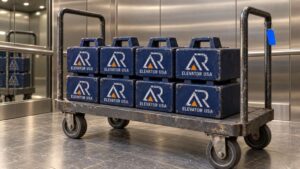
Start early. One should begin early, at least six months in advance, although preferably a year in advance. The test weights, witnesses, and schedules of the inspectors have to be coordinated. In a building where there are a lot of elevators, it would be wise to schedule the test at different quarters. The test will take place after five years, which will be known well ahead of time. This should therefore be part of the capital budget, not operating surprises.
Choose the season carefully. Times of year where the machine room does not have to battle 110 degree heat outdoors lead to better results and less false alarm problems. Summer testing can be performed, but additional heat stress is placed on equipment that is already pushed hard by the test, and on hydraulic units, the numbers are affected by changes in oil temperature.
Regular servicing before a Category 5 test can help identify equipment wear, leveling problems, and temperature-related issues early. Building owners can review our elevator preventive maintenance program to understand available routine service options.
Tell the building. A loaded safety test means the car is out of service, an entrance or two may be blocked for weight handling, and the freight elevator may be the route for the weights. Tenants need notice. On a residential tower in Summerlin or a senior community in Henderson, that notice matters even more.
Line up the paperwork before test day. The mechanic who performs the test and the inspector or special inspector by whom it is witnessed are required. The notice to the MCS, the periodic test record, the tags placed on the buffer and governor, and the report submitted to the file are also required. Every one of these has to exist afterward, and missing any one of them turns a passing test into a compliance problem.
What fails a Category 5 test, and what it costs
When a Category 5 test finds a problem, it is usually one of these:
- Governor tripping speed outside the required range, which means service work on the governor and a retest.
- Stopping distance out of range on a Type B safety, which points to the safety itself, the guide rail condition or the governor, and takes diagnosis rather than a simple adjustment.
- Not enough remaining travel in the safety rollers or dogs, which often means older safeties at the end of their service life.
- Buffer condition or compression problems, which mean a buffer replacement or rebuild.
- A driving machine brake that will not hold the required load, which on a passenger elevator means it could not hold 125 percent of rated load. That calls for brake service at minimum and, on older machines, a machine assessment.
- The car might not get stopped within the required limit because of the overspeed valve or failure of pressure to get maintained in the hydraulic system. This may lead to debate on valve or power unit.
- A worn-out plunger packing or cylinder that is not visible can be diagnosed, and this is the problem that usually prompts the need to undertake hydraulic modernization, particularly when dealing with old underground cylinders.
A failure does not automatically shut the elevator down. It means the condition must be corrected and the test repeated, and that timeline can run into your permit expiration. That is the real cost of a Category 5 test gone wrong. Not the test itself, but the correction work, the second test, the witness scheduling, and the risk of the permit lapsing while it all happens.
When testing reveals deficiencies that require corrective work, building owners can explore our annual inspection deficiency repair services for assessment, repair planning, and documentation support before any required retesting.
Where a condition is severe, NAC 455C.530 allows the MCS to issue an emergency order restraining the equipment. No building wants to be there, and a calendar prevents it.
Documents a Las Vegas building should hold after a Category 5 test
- The Category 5 test report, with pass or fail results for each item tested.
- Signed documentation showing the test was performed by a certified elevator mechanic and witnessed by an inspector or special inspector, with proof the MCS was notified.
- The updated periodic test record for the unit, and the test tags on the buffer, governor and equipment as A17.1 requires.
- The permit file, holding the annual inspection report, the Category 5 test report, and the fire recall test report signed by the fire alarm company and the elevator company.
- The maintenance control program and maintenance records required by NAC 455C.504, updated to reflect the test.
If your building cannot produce these on request, the machinery may be perfectly safe and the file will still fail.
How AR Elevator USA fits into your Category 5 year
We perform and review elevator testing and inspection work across the Las Vegas Valley, and we have seen a five year test go wrong in just about every way it can, from a governor that would not trip in range to a safety that failed to stop the car within the acceptable distance.
Property owners, property managers, HOA boards, hotels, and facility managers are served by AR Elevator USA. Services are provided across Las Vegas, Henderson, North Las Vegas, Summerlin, Spring Valley, Enterprise, Paradise, Boulder City, and greater Clark County. Traction and hydraulic elevator maintenance, repair, modernization, and code compliance assessments are provided by us. Buildings are also helped to prepare for annual inspections, Category 1 and Category 5 testing, fire recall testing, and the records that must be kept in the permit file.
If your elevator is approaching its five year mark, if your permit file is missing a test report, or if you simply do not know when your last Category 5 test took place, call us and we will find out. Knowing the date five years in advance keeps a test from turning into an emergency.
Call 702-810-2757 or 702-463-6430.
Email: info@arelevatorusa.com
AR Elevator USA, 4345 Corporate Center Drive, Suite 203, North Las Vegas, NV 89030
FAQ about Category 5 elevator testing in Las Vegas
How often is Category 5 testing required? Every five years. A 12-month interval for Category 1 and a 60-month interval for Category 5 are recommended in the A17.1 intervals table, and the final frequency is set by the authority having jurisdiction. The annual Category 1 obligation does not go away in the year a Category 5 test is due.
Is Category 5 testing required to be performed on hydraulic elevators in Nevada? It depends on the equipment. A roped hydraulic elevator with car safeties and a governor is tested at rated load much like a traction unit, and a unit with an overspeed valve has that valve tested with rated load in the car. No such devices are available for proof testing on a direct plunger hydraulic elevator without safeties and a governor, so the hydraulic items are applied instead.
How are Category 1 and Category 5 testing distinguished? The yearly testing of the safety devices and operation systems falls within Category 1. Category 5 is the five year proof test of the safeties, governor, buffers and driving machine brake and it adds the load testing. On a passenger elevator, the brake test load is 125 percent of rated load.
What load is used for the driving machine brake test? On a passenger elevator, and on a freight elevator permitted to carry passengers, it is 125 percent of rated load. On a freight elevator not permitted to carry passengers, it is rated load. On a one piece load freight elevator, the greater of rated load or the one piece load applies.
Who can perform a Category 5 test in Nevada? A person certified as an elevator mechanic. The test must be witnessed by an inspector or special inspector, and the licensed elevator contractor must notify both the special inspector and the MCS at least 3 business days before the test.
Does the state have to be notified before the test? Yes. Under NAC 455C.522, the licensed elevator contractor must give the special inspector and the MCS at least 3 business days of notice, including the date, time and location of the test.
How long do we have to submit the test report? The report must be submitted to the MCS within 10 business days after the test is completed.
Can a Category 5 test be performed without test weights? In some cases, yes. A17.1 Section 8.6.11.10 permits alternative no load methods for safeties, oil buffers and driving machine brakes, subject to approval by the authority having jurisdiction, with engineering validation and a detailed report. Confirmation should be obtained before it is assumed to apply to your building.
What does a Category 5 test cost in Las Vegas? The cost is determined by the number of elevators, the equipment type, whether test weights must be brought in, the witness requirement, and any repair work uncovered by the test. Only part of the cost is accounted for by the test itself. The correction work and the retest are where budgets get surprised, which is why planning a year ahead pays off.
What happens if the building misses its Category 5 test? The Category 5 report is one of the documents your permit file needs. If the test is not performed and the report is not on file, your permit renewal is at risk and the elevator is operating without the documentation that supports its operation. That is a violation that lands on the owner or the owner’s agent.
How long does a Category 5 test take? Plan for a good part of a day per traction elevator once the weights, the mechanic crew and the witness are on site, plus setup and removal time. Hydraulic units without safeties are usually faster, and an approved no load method can shorten the time on site considerably.
How do I know when my elevator’s next Category 5 test is due? The dates on the periodic testing record card and test tags should be checked and compared with the original installation/alteration date of the equipment. In case you have incomplete records, the schedule can be derived from the history of the equipment through the help of your maintenance company or an elevator consultant.