
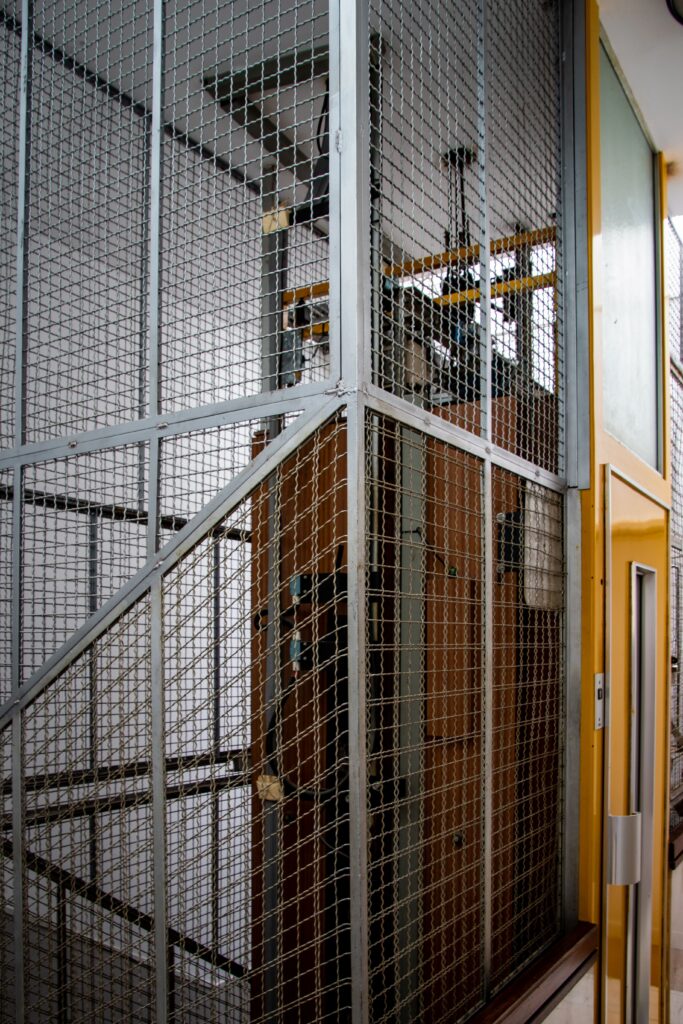
An elevator that runs normally in the morning but shuts down during a busy afternoon needs more than another reset. For a property manager arranging traction elevator maintenance in Las Vegas, that pattern is a reason to ask what changed between the first trip of the day and the shutdown.
Traction elevators are not immune to heat simply because they do not use a hydraulic power unit to lift the car. For example, ZIEHL-ABEGG identifies excessive ambient temperature, restricted cooling, incorrect inverter settings and overloading as possible causes of overheating in its ZAtop machine troubleshooting guidance, which is why the machine and its operating environment need to be evaluated together in the manufacturer’s operating instructions.
For properties across the Greater Las Vegas Valley, the practical question is not simply whether the weather is hot. It is whether the installed equipment is staying within its operating limits during the conditions that produce the problem.
Start With the Temperature the Equipment Actually Experiences
Before replacing a component, establish where temperature is being measured. Outdoor air, machine room air, air entering a controller cabinet and the surface of a motor are different measurement points and should be recorded separately.
A manufacturer’s ambient temperature limit is not the same as an allowable internal or surface temperature: the ZAtop SM132 models covered by instruction A-TBA17-03-GB specify an operating ambient range of 0°C to 40°C, or 32°F to 104°F, while the brake instructions within that document identify a separate brake flange temperature limit (ZIEHL-ABEGG). By comparison, the KEB COMBIVERT F6 frame size 2 elevator drive manual specifies a maximum surrounding air temperature of 45°C, or 113°F, for UL and CSA compliance (KEB).
These are examples for specific products, not a universal temperature allowance for Nevada elevators. Ask your contractor to identify the limits for the actual machine, brake, drive and controller before deciding whether the equipment space is adequately cooled.
Bearings Need the Right Lubricant at the Operating Temperature
Bearing lubrication depends partly on the viscosity of the oil forming the protective film, including the base oil within a grease, and that viscosity decreases as temperature rises (SKF Bearing Maintenance Handbook). However, thinner oil does not automatically mean greater friction: SKF explains that low viscosity reduces lubricant friction but also produces a thinner film, so the objective is an appropriate balance for the bearing and its operating conditions (SKF).
If the lubricant film becomes insufficient to separate the contacting surfaces, metal contact and wear can follow; SKF describes this mechanism in its guidance on bearings operating at high temperatures (SKF). Grease life also depends on temperature, bearing size, speed, load and grease type, rather than on a calendar interval alone (SKF grease life guidance).
The maintenance response should therefore be specific to the machine. Have the contractor confirm the approved lubricant, the required quantity, the appropriate service interval and whether the bearing is intended to be relubricated before adding grease or changing products.
For a bearing that becomes noisier during summer operation, ask for temperature and vibration readings under comparable operating conditions. Do not assume that adding more lubricant will resolve the underlying problem.
Geared Machines Need More Than an Oil Level Check
On a geared traction elevator, include the gearbox in the investigation rather than treating the motor as the only possible source of trouble. Ask the mechanic to assess lubricant condition, leakage, unusual gear noise and temperature alongside the oil level.
There is an important distinction between oil thinning as it gets hotter and oil deteriorating over time: Mobil’s gear oil data show lower viscosity at higher measurement temperatures, while its oxidation testing describes viscosity and acid number increasing as oil oxidizes (Mobil gear oil data,Mobil oxidation testing). That is why a discussion of heat-related lubrication problems should address both operating viscosity and long-term lubricant degradation.
Where oil condition is uncertain, consider sampling and analysis rather than relying on appearance alone. Any change in lubricant grade or chemistry should be checked against the traction machine manufacturer’s requirements, not selected simply because a product is marketed for high temperatures.
Gearless Does Not Mean Heat-Proof
Removing the gearbox does not remove the need for thermal protection: ZIEHL-ABEGG’s gearless machine instructions still specify ambient limits, unobstructed cooling air and winding temperature monitoring (ZIEHL-ABEGG). Motor winding insulation also ages under thermal stress, with ABB explaining that high winding temperature shortens insulation life in its motor maintenance guidance (ABB).
For a machine installed inside the hoistway, include the air around the machine in the temperature survey instead of relying only on a controller closet reading. Ask whether the measured current, traffic pattern and temperature trend are consistent with the machine’s ratings and approved settings.
An overheating complaint should not automatically become a motor replacement recommendation. First establish whether the problem involves cooling, loading, settings, a mechanical defect or a combination of conditions.
A Hot Brake Needs Careful Diagnosis
It is misleading to describe every traction elevator brake as producing friction heat on every normal stop: the ZAtop brake instructions describe a holding brake for static applications, with dynamic braking limited to emergency stops and inspection braking (ZIEHL-ABEGG). The same instructions identify brake duty cycle and mounting temperature as relevant to temperature rise, switching behavior and braking performance (ZIEHL-ABEGG).
For that reason, a hot brake deserves more than a quick visual check. The qualified elevator mechanic should evaluate release operation, air gap, coil supply, duty cycle, monitoring and any evidence of rubbing, assessing each against the requirements for that particular assembly.
The review should identify whether the machine has a single brake assembly, independent brake circuits or separate emergency braking equipment. Do not bypass brake monitoring, thermal protection or other safety functions to keep an elevator running through a heat-related fault.
Drives and DC-Bus Capacitors Have Their Own Heat Problems
An elevator drive can reach a thermal limit even when the machine itself is not the source of the shutdown: KEB’s F6 manual describes heat sink temperature protection and explains that higher switching frequency produces greater losses and higher heat sink temperature (KEB). It also requires the cabinet design to account for the total heat dissipated by the devices inside, not just the drive in isolation (KEB).
Where a drive uses aluminum electrolytic DC-bus capacitors, sustained heat can shorten their life, and ripple current contributes additional internal heating (Nichicon technical guidance). Capacitor deterioration can involve loss of capacitance and increased electrical losses, but a summer drive fault by itself is not a capacitor diagnosis; Nichicon’s guidance identifies several electrical stresses and operating conditions that must be considered (Nichicon).
Ask for the fault history and supporting measurements before approving a drive replacement. If the proposal does not also explain whether cabinet cooling and the operating environment are acceptable, an important part of the investigation may be missing.
Check Cooling Fans, Filters and Airflow
Small cooling components deserve attention before the investigation moves straight to expensive equipment. KEB calls for unobstructed ventilation openings, scheduled filter maintenance and fan replacement when audible vibration or squeaking develops in its F6 installation guidance (KEB).
A useful site review should cover cabinet filters, fan operation, heat sink cleanliness, cooling air paths and machine room HVAC performance. For equipment exposed to dusty conditions, ask whether the cleaning and inspection schedule reflects the actual environment.
Do not treat an open controller door or a portable fan as a permanent cooling design. Have the elevator contractor and HVAC contractor coordinate any corrective work, with attention to equipment requirements, electrical protection and the building’s applicable fire and mechanical provisions.
Investigate the Afternoon Fault During Afternoon Conditions
Consider an illustrative situation: an elevator operates normally before office hours, begins reporting thermal faults after lunch and runs again after cooling. That pattern is a reason to investigate temperature and workload together, not proof that desert heat is the sole cause.
Request a time-based record of the conditions around each shutdown. A useful investigation can compare machine room or hoistway air temperature, cabinet inlet temperature, drive diagnostics, motor current, traffic and the exact fault time.
Where the symptoms justify it, add bearing temperature, gearbox temperature, brake condition and vibration measurements. Record the measurement location and operating condition consistently so that readings from different visits can be compared.
The investigation should remain open to other causes. For example, ZIEHL-ABEGG’s troubleshooting guidance lists excessive ambient temperature, incorrect inverter settings and overloading as possible explanations for excessive machine temperature (ZIEHL-ABEGG).
Building staff should document the time, symptoms and service interruptions, then contact the elevator service provider. Leave access to machinery spaces, electrical testing, brake work and decisions about safe return to service to authorized, qualified personnel.
Make Summer Maintenance a Documented Plan
For a hotel near the Strip, an office property in Henderson or a multifamily building in North Las Vegas, ask for a seasonal review before recurring shutdowns begin. The review should establish equipment temperature limits, cooling responsibilities, lubrication requirements and the response to repeated thermal faults.
Nevada’s NAC 455C.504 places responsibility for safe operation and proper maintenance on the owner after the initial operating permit is issued, and requires the maintenance control program and records to be available for review (Nevada Legislature). NAC 455C.446 also distinguishes existing installations from new work and addresses the requirements applicable to alterations and repairs, so compliance should be evaluated for the particular elevator rather than assumed from a general blog article (Nevada Legislature).
Keep temperature trends, fault reports, service findings and corrective actions with the maintenance documentation. If an HVAC problem is found, assign responsibility for correcting it and confirm the results under operating conditions afterward.
The objective is not simply to clear an error code. It is to establish what caused the fault, correct the condition and document whether the elevator remains within its operating requirements.
Traction Elevator Troubleshooting Across Greater Las Vegas
AR Elevator USA provides traction elevator troubleshooting, maintenance, repair, modernization and technical evaluation throughout the Greater Las Vegas area, including Henderson, North Las Vegas, Summerlin, Paradise and the Las Vegas Strip. The operating condition behind the fault is identified rather than the most recent error code being treated as the entire diagnosis.
If increased noise, thermal faults or repeated shutdowns are experienced by your elevator during hot weather, an on-site evaluation and a detailed proposal can be obtained by contacting AR Elevator USA. We can help you understand whether the findings point to the machine, brake, drive, cooling system or a combination of issues.
AR Elevator USA
Elevator Maintenance, Repair, Modernization and Technical Troubleshooting
Phone: 702-810-2757 or 702-463-6430
Email: info@arelevatorusa.com
Address: 4345 Corporate Center Drive, Suite 203, North Las Vegas, NV 89030
Website: www.arelevatorusa.com