
For facility managers, commercial property owners, real estate investors and hospitality operators throughout Southern Nevada, a direct connection is established between elevator reliability and tenant satisfaction, building operations, and long-term asset value.
Elevators perform some of the hardest work of any system in a commercial building. However, in the Las Vegas region, further complications are encountered by elevators owing to the extreme temperature in summers, the presence of dust in the air and the high frequency of operation. Irrespective of whether it is hospitals, retail establishments, offices, hotels or apartments that are being served by elevators, the wear and tear is continuous.
As equipment ages an important question is inevitably faced by building owners: Does it make more financial sense for the system to continue being repaired, or is it time for modernization to be invested in?
The answer is rarely determined by a single repair bill. On the contrary, there should be a review of the cost of operations, availability of spare parts, state of equipment, and long-term considerations on safety standards for the premises. Owners will be able to prevent downtime and other problems through the knowledge of when an elevator goes beyond maintenance.
When Repeated Repairs Become a Warning Sign
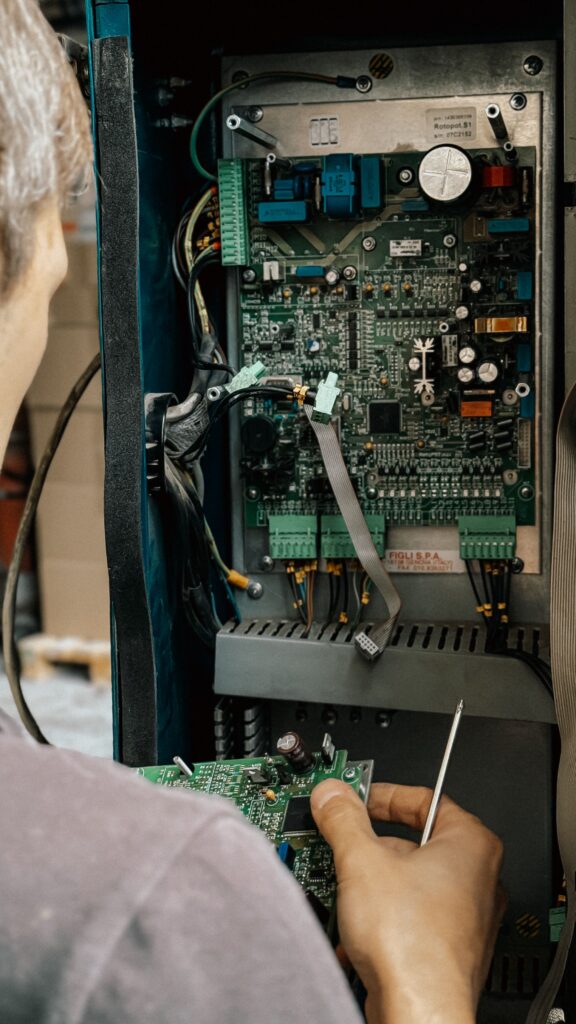
Decades of service are designed to be provided by most commercial elevator systems when they are properly maintained. However, age alone is not always considered the deciding factor. The more important measure is determined by how reliably the equipment performs and how much effort is required to keep it operating. One of the earliest indicators that a system may be approaching modernization is identified by an increase in service callbacks. The end of their useful life is often indicated for critical components by frequent issues such as door malfunctions, inconsistent floor leveling, intermittent shutdowns, and controller faults. Another common challenge is caused by component obsolescence. Since older systems and electronic components have been discontinued by their respective companies, it is becoming harder and costly to obtain replacement parts. Sometimes, elevators have been kept out of operation for weeks because of one broken circuit board, processor, or a component of the controller system.
Energy performance is another factor that is frequently overlooked by property owners. Higher electricity consumption is typically associated with older elevator equipment, particularly hydraulic systems and geared traction machines, compared with modern alternatives. Over time, higher operating expenses are contributed to by these inefficiencies and are often hidden within overall facility utility costs.
As equipment ages, greater significance is also given to compliance considerations. Modern elevator safety standards continue to be evolved, and increasingly expensive modifications are often required by older systems to remain compliant. Individual code deficiencies may be addressed year after year by building owners without the larger reliability issue being solved. In many cases, modernization becomes the most practical way to satisfy current safety requirements while improving overall system performance.
Emergency communication systems have also become an increasingly important consideration when evaluating modernization projects. Many older elevators were installed with communication technology that no longer meets modern operational expectations. Today’s systems can incorporate two-way hands-free voice communication, one-way video observation of the elevator cab for entrapment assessment, and text-enabled communication capabilities that improve accessibility and emergency response coordination. Passenger conditions during entrapment events can be better assessed by monitoring personnel and first responders through these technologies, while multiple methods of communication are provided for occupants who may be unable to use a traditional voice-only system.
Understanding What Elevator Modernization Involves
Many property owners assume modernization means completely replacing the elevator system. In reality, modernization is typically considered a targeted upgrade in which major structural components are retained while the systems most responsible for reliability, safety, and performance are replaced.
The elevator guide rails, cab frame, hoistway, counterweight assembly, and other major structural elements are generally kept in place if they are found to be in acceptable condition. The replacement of aging technologies that create service issues, maintenance challenges and operational inefficiencies is focused on during the modernization process.
A Typical Modernization Project May Include:
• Replacement of outdated relay-based controls with microprocessor-driven controllers
• Installation of Variable Voltage Variable Frequency (VVVF) drive systems
• Upgraded door operators and door protection equipment
• Modern dispatching and communication systems
• Enhanced safety circuits and monitoring technology
• Advanced emergency communication systems with two-way hands-free voice communication
• One-way in-car video capability that allows monitoring personnel and emergency responders to visually assess passenger entrapment situations
• Text-enabled communication functionality that improves accessibility and provides an alternative communication method during emergencies
• Replacement hydraulic power units, pumps, or valve assemblies where applicable
• Updated fixtures, hall stations, indicators, and cab interiors
System reliability, diagnostics, accessibility, maintainability, passenger safety and ride quality are significantly improved through these upgrades, while the useful life of the elevator is extended for many additional years.
Why Door Equipment Often Becomes a Modernization Priority
Across the elevator industry, door-related equipment consistently accounts for a significant percentage of service calls.
Elevator doors are interacted with by passengers thousands of times each month, making door operators among the most heavily used mechanical components in the system. Over years of operation, natural wear is experienced by tracks, linkages, control assemblies and rollers resulting in nuisance shutdowns and recurring service issues.
Smoother operation, faster response times, greater reliability and improved passenger safety are provided by modern door systems. In many cases, upgrading door equipment alone can dramatically reduce service interruptions and improve overall elevator performance.
The Financial Case for Modernization
Modernization requires a larger upfront investment than an individual repair, but evaluating only the immediate cost can be misleading.
The more meaningful comparison is total cost of ownership over the remaining life of the equipment.
Better operational efficiency and advanced diagnostic capabilities are provided by modern controllers and drive systems. Developing issues can be identified quickly by maintenance technicians, reducing troubleshooting time and minimizing unexpected failures.
Measurable benefits are delivered through modernization in another area: energy consumption. Contemporary drive technology typically requires less power while providing smoother acceleration and deceleration. For properties with high passenger volumes, these efficiency improvements can generate meaningful utility savings over time.
Maintenance costs are also made more predictable. Increasingly frequent repairs are often required by older systems as components approach the end of their lifecycle. Fewer corrective service calls are generally required by modernized equipment, allowing maintenance programs to be focused on preventive maintenance rather than recurring breakdowns.
There are also indirect financial benefits. The tenant experience is improved, a property’s professional image is supported, and operational complaints are reduced through reliable elevator operation. In a competitive market such as Las Vegas, occupancy stability, long-term property value and tenant retention can be supported by dependable vertical transportation.
Evaluating Repair vs. Modernization
Property owners should consider modernization when multiple indicators begin appearing at the same time.
Common signs include:
• Annual repair costs continue increasing year after year.
• Major replacement parts are obsolete or difficult to obtain.
• Emergency service calls are becoming more frequent.
• Equipment reliability is affecting tenants, guests, employees, or operations.
• Multiple safety or code-related upgrades are required.
• Energy consumption remains high compared to modern equipment.
• Existing emergency communication systems lack modern functionality such as two-way voice communication, video-based entrapment assessment, or text-enabled emergency messaging.
• The 20-year service mark is being approached or has been exceeded by the elevator.
When several of these conditions exist simultaneously, continued investment in isolated repairs is often viewed as a short-term strategy that postpones a larger capital improvement rather than eliminating the need for one.
A Strategic Investment in Building Performance
Elevator modernization is ultimately considered an asset management decision rather than simply a maintenance decision.
The objective is not only to have aging equipment replaced but also to have reliability improved, long-term operating costs reduced, passenger safety enhanced, code compliance strengthened, and the property positioned for future performance expectations.
For many Southern Nevada building owners, the service life of existing elevator infrastructure can be extended through modernization, making it one of the most cost-effective solutions without the expense and disruption associated with a complete replacement.
Partner with AR Elevator USA
At AR Elevator USA, the true condition of elevator systems is evaluated for property owners throughout Las Vegas and Southern Nevada, and modernization strategies that align with operational goals, budget requirements, and regulatory obligations are developed.
Every phase of the modernization process is managed, including equipment assessment, engineering review, testing, system design, installation, permitting, and final state inspection. Modernized systems can also be integrated with our Giga Lift Smart IoT Platform, through which real-time monitoring and predictive maintenance insights are provided to help potential issues be identified before downtime is caused.
Are you ready for your maintenance budget to stop being spent on temporary repairs and for long-term reliability to be planned for?
A modernization assessment should be scheduled with AR Elevator USA today, and a transparent, detailed proposal should be received.
Phone: 702-810-2757 | 702-463-6430
Email: info@arelevatorusa.com
Written by Eng. Houssam Zammam
Elevator Machine Room Code Requirements in Las Vegas: A Guide for Building Owners
Elevator Machine Room Code Requirements in Las Vegas: A Guide for Building Owners Written by...
Understanding Nevada’s Fire Recall Testing Requirements: Why So Many Elevators Are Failing Inspection
Written by Eng. Houssam Zammam, QEI Elevator Inspector and Elevator Portfolio Manager Sometimes, an elevator...
Las Vegas Hydraulic Elevator Oil Change or Oil Filtration: What’s best for Your Elevator?
Written by Eng. Houssam ZammamElevator Portfolio Manager | Elevator Modernization & Vertical Transportation Consultant If...
Oil Overheating in Hydraulic Elevators in Las Vegas: Why It Happens and How to Fix It
Written by Eng. Houssam ZammamElevator Portfolio Manager The cab and doors are used by most...
Low Oil Problems in Hydraulic Elevators in Las Vegas: Causes, Warning Signs, Expensive Consequences, and Professional Repair Solutions
By Eng. Houssam ZammamQEI Elevator InspectorElevator Portfolio Manager | Elevator Modernization & Vertical Transportation ConsultantHydraulic...
How Extreme Las Vegas Heat Affects Hydraulic Elevator Oil and System Performance
By Eng. Houssam ZammamQEI Certified Elevator InspectorElevator Portfolio ManagerAR Elevator USA The relentless nature of...