
A well-running elevator is rarely noticed by most building owners and property managers. The building’s elevator quietly and efficiently transports people throughout the building. When an elevator is taken out of service, building operations are affected immediately. Tenant complaints arise, foot traffic builds up, operations are delayed, and financial losses occur almost immediately.
An Elevator downtime is not just an inconvenience. It directly impacts your building’s reputation, financial performance and tenant satisfaction. Emergency repair fees are incurred, operations are delayed, and negative online reviews are received, all of which result in rapidly increasing costs.
The reasons for elevator failures and the methods used to prevent them should be understood to ensure that investments are protected and buildings are kept operational.
The top causes of elevator downtime and the proactive steps used to eliminate them are presented below.
The Top 3 Causes of Elevator Downtime
Although elevators are complex systems, most unexpected shutdowns can be traced back to three primary issues.
- Door Operator Failures (The #1 Cause of Shutdowns)
Nearly 70% of all elevator service calls are related to door problems. Elevator doors open and close thousands of times per week, making them the most heavily used mechanical component in the system.
Common Causes of Door Operator Failures:
Misaligned door tracks
Dirt and debris in the sill grooves
Worn or damaged door rollers
Failing light curtains or safety edges
What Happens:
If the interlock system cannot confirm the doors are fully closed and locked, the elevator will not move, a built in safety feature that results in an immediate shutdown. - Power Quality Issues & Electrical Spikes
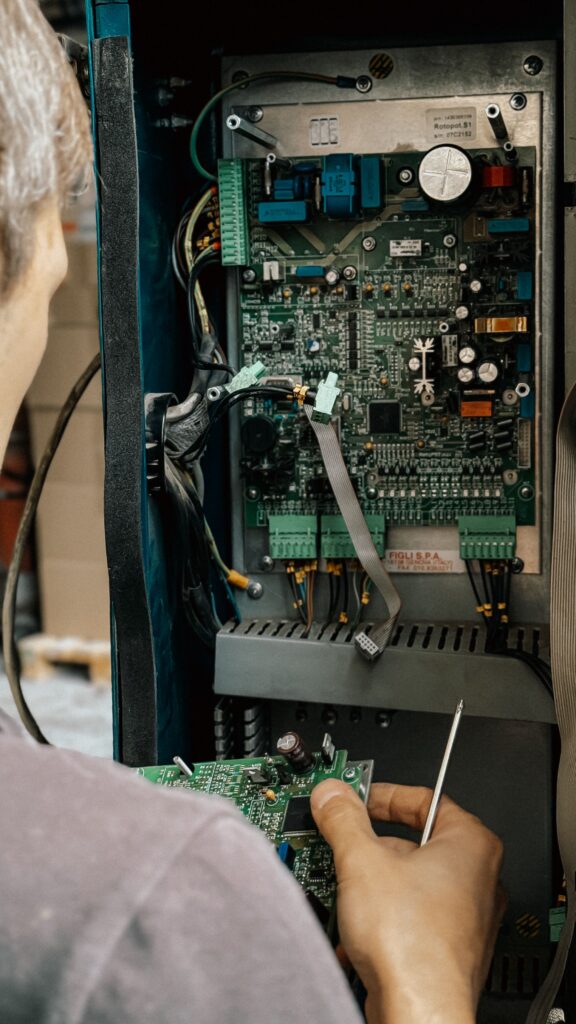
Modern elevators rely on sensitive microprocessors and software driven controllers. Even minor electrical disturbances can cause major problems.
Common Causes of Power Quality Issues & Electrical Spikes:
Voltage fluctuations
Brownouts
Single phasing (loss of one phase in a 3 phase power supply)
What Happens:
A protective fault mode is activated to prevent damage to the motor or controller. The system must be manually reset by a technician, and damaged components must be replaced in some cases. - Lubrication Breakdown & Contaminated Fluids
Friction is the enemy of every elevator system, whether hydraulic, geared traction, or gearless traction.
Common Causes:
Old or degraded oil
Insufficient lubrication on the guide rails
Overheated hydraulic fluid is losing viscosity
What Happens:
Blown fuses, worn bearings, noisy operation, and eventually a safety shutdown are caused by increased friction.
How to Prevent from Elevator Failures
Preventing downtime is not about reacting quickly. It’s about preventing failures before they occur. Here’s a strategic, building-friendly framework to maximize uptime.
Door Sills and Tracks Cleaning
Frequency: Daily
Your cleaning staff plays a bigger role than you think. Small debris, pebbles, dust, wrappers, can jam the doors and throw off alignment.
Action:
Vacuum the door sills and tracks more often to prevent the #1 cause of shutdowns.
Enforce True Routine Maintenance
Frequency: At least quarterly
A maintenance contract is only valuable if the technician performs the work.
Action:
Ensure your elevator maintenance company:
Inspects the machine room
Checks fluid levels
Test safety circuits
Lubricates moving components
Verifies door operation
Monitor Machine Room Climate Control
Frequency: Seasonally
Temperature changes are highly influential on the performance of elevator controllers and hydraulic fluids.
Action:
It should be verified that stable temperatures between 65–90°F are maintained by the HVAC systems in the machine room and overhead spaces, especially during summer heat waves. - Plan for Modernization Before Parts Become Obsolete
Frequency: Long Term (20–25 years)
Older elevators become harder to service simply because replacement parts are no longer manufactured.
Action:
A modernization plan should be developed if an elevator is more than 20 years old. Faster troubleshooting and greater reliability and reduced downtime are achieved by upgrading to a modern controller.
The Most Critical Factor is to choose the Right Service Partner
Even with perfect preventative care, mechanical systems eventually need attention. When that moment comes, the difference between a two hour fix and a three day outage comes down to one thing: your elevator service provider.
A premium service partner focuses on three pillars:
Immediate Responsiveness
When an elevator is down, every minute matters. You need a team that answers the phone and dispatches immediately.
Pride in Craftsmanship
A great technician doesn’t just swap parts. They:
Clean the work area
Identify the root cause
Ensure long term reliability
Leave the machine room better than you found it
Reliable Execution and Accurate Diagnosis
The right partner arrives prepared, carries common replacement parts, and fixes the issue correctly the first time.
Take Control of Your Building’s Mobility
Proactive action should be taken before problems are reported by tenants. A proactive approach to elevator care protects your investment, preserves your building’s reputation, and eliminates the stress of unexpected downtime.
AR Elevator USA is Las Vegas’s trusted, licensed elevator service company. Twenty-four-hour emergency repair, preventive maintenance, and expert diagnostics are provided for all elevator brands throughout Las Vegas, Henderson, and Nevada.
Call us today or request an inspection online — our certified technicians are standing by to keep your building moving.
Elevator Machine Room Code Requirements in Las Vegas: A Guide for Building Owners
Elevator Machine Room Code Requirements in Las Vegas: A Guide for Building Owners Written by…
Understanding Nevada’s Fire Recall Testing Requirements: Why So Many Elevators Are Failing Inspection
Written by Eng. Houssam Zammam, QEI Elevator Inspector and Elevator Portfolio Manager Sometimes, an elevator…
Las Vegas Hydraulic Elevator Oil Change or Oil Filtration: What’s best for Your Elevator?
Written by Eng. Houssam ZammamElevator Portfolio Manager | Elevator Modernization & Vertical Transportation Consultant If…
Oil Overheating in Hydraulic Elevators in Las Vegas: Why It Happens and How to Fix It
Written by Eng. Houssam ZammamElevator Portfolio Manager The cab and doors are used by most…
Low Oil Problems in Hydraulic Elevators in Las Vegas: Causes, Warning Signs, Expensive Consequences, and Professional Repair Solutions
By Eng. Houssam ZammamQEI Elevator InspectorElevator Portfolio Manager | Elevator Modernization & Vertical Transportation ConsultantHydraulic…
How Extreme Las Vegas Heat Affects Hydraulic Elevator Oil and System Performance
By Eng. Houssam ZammamQEI Certified Elevator InspectorElevator Portfolio ManagerAR Elevator USA The relentless nature of…