
If a commercial building is owned or managed in the Las Vegas Valley, it is already known that first impressions are made the moment a tenant, buyer, or guest steps through the lobby doors. What a lot of property owners overlook is that the elevator ride is also included as part of that impression. A message about the building is conveyed to visitors by a scuffed cab with dim lighting and worn buttons before they even reach their floor. On the flip side, a renovated cab with clean finishes and modern lighting is seen as a signal that the property is well cared for, and that reputation is given real weight when the time comes to lease space or sell the asset.
Elevator cab renovation is one of those projects through which a return on investment can be achieved in ways that are easy to underestimate. It is also, and this part matters a lot in Nevada right now, a project that has to be done within a fairly strict set of safety rules. Below is a look at the upgrades that actually move the needle on building value, followed by what you need to know about staying on the right side of Nevada’s elevator code.
Before starting a cab renovation, building owners can consult AR Elevator USA’s elevator code compliance services to review applicable safety requirements and inspection obligations.
The Upgrades Tenants and Visitors Actually Notice
Lighting: Even a freshly painted cab can be made to look tired by old fluorescent tubes or yellowed incandescent bulbs. Either a basic recessed down light plan, a strip light in the ceiling periphery, or a back-lit translucent ceiling panel would work just as well in achieving an immediate upgrade in the brightness of the cab with LED lighting. It also cuts your energy draw and stretches out the time between bulb changes, which matters during the summer months when every mechanical system in a Las Vegas building is working overtime.
Wall panels and handrails: Cab walls are subjected to significant wear from rolling carts, luggage, and ordinary daily use. A more upscale look can be achieved by replacing chipped or faded laminate with brushed stainless steel, architectural glass, or a durable composite laminate, while greater durability is provided against daily wear. In cases where newly installed panels are complemented with a properly positioned satin finish handrail, two functions are fulfilled simultaneously, in that the bottom third of the wall is safeguarded from any abrasions while, at the same time, a nice line is provided.
Flooring: More punishment than any other surface in the building is probably taken by the cab floor. Dirt, moisture, and odors tend to be retained by carpet faster than might be expected, especially in high-traffic buildings. Better slip resistance is offered by luxury vinyl tile, lightweight stone veneer, or raised rubber tile flooring, while easier maintenance and greater durability under heavy foot traffic are also provided.
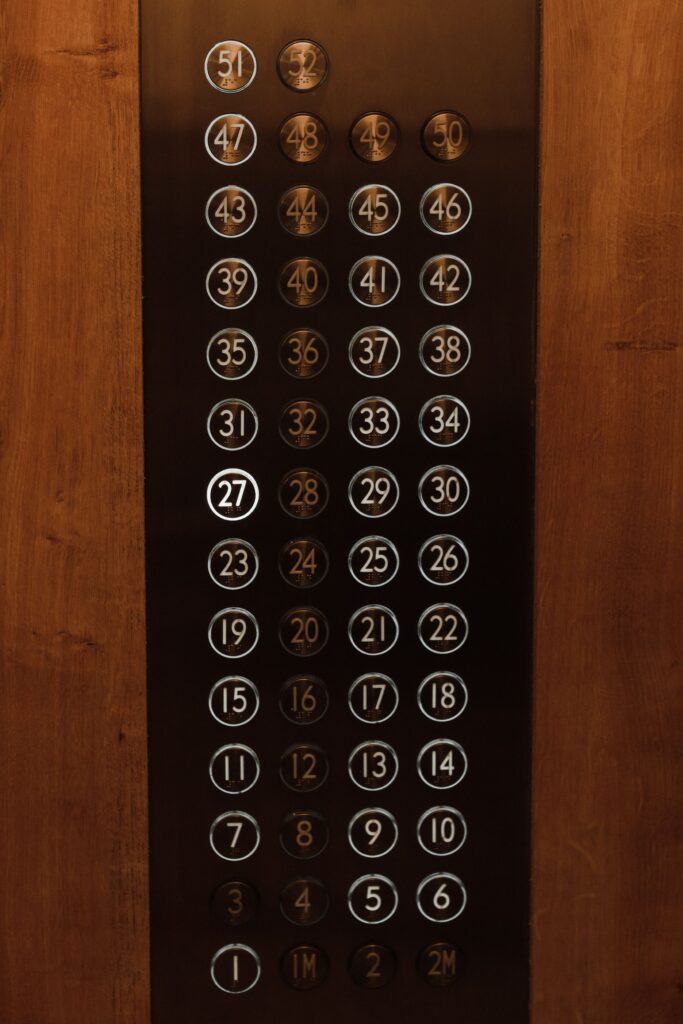
Car operating panels: The buttons are touched by passengers on every ride, so a panel with worn plastic buttons or a scratched faceplate is easily noticed. Replacing it with brushed stainless steel and a flush digital display is a relatively small line item that has an outsized effect on how modern the whole cab feels.
Accessibility and Emergency Communication During a Cab Renovation
A cab renovation is also an opportunity to evaluate accessibility. Depending on the existing elevator and the scope of work, improvements may include reachable operating controls, tactile and Braille button identification, visible and audible floor indicators, and accessible emergency signaling devices. Property owners should have the proposed changes reviewed against applicable ADA standards rather than assuming that a newly installed control panel automatically meets accessibility requirements.
Emergency communication deserves similar attention. A renovation can provide an opportunity to assess hands-free two-way communication, emergency lighting, clear passenger instructions, and visual or text-based communication features where required by the applicable code. Integrating these improvements into the renovation plan may help avoid separate equipment shutdowns later.
The Long-Term Value of an Elevator Cab Renovation
The benefits of a professionally planned renovation extend beyond appearance. Energy-efficient LED lighting can reduce lighting-related electricity consumption and maintenance, while modular wall panels and durable flooring can make routine cleaning and isolated repairs easier.
For hotels, medical facilities, office buildings, and residential properties, an attractive and well-maintained elevator interior can also improve the experience of tenants, visitors, and prospective buyers. These benefits can support a building’s marketability, although the financial return depends on project costs, usage, maintenance needs, and the property’s specific circumstances.
If the planned improvements extend beyond the cab interior, building owners can explore elevator modernization services to evaluate upgrades to controls, doors, drives, and other elevator equipment.
Why a Cab Renovation Is Not Just a Cosmetic Job
Here is where a lot of property owners get tripped up. Changing the materials inside an elevator car is not the same as repainting a hallway. Every material that is installed on the walls, ceiling, or floor of an elevator cab is required to meet fire safety standards under ASME A17.1, and the 2019 edition of that code has been adopted by Nevada by reference under NAC 455C.500.
Specifically, wall, ceiling, and floor materials used inside the cab are required to have a flame spread rating between 0 and 75 and a smoke development rating between 0 and 450, as tested to ASTM E84 or an equivalent standard. Floor coverings and their adhesives have their own separate test, needing a critical radiant flux of at least 0.45 watts per square centimeter under ASTM E648. This is not something you can verify by eye. It requires documentation from the material manufacturer showing the product passed these exact tests, and that paperwork needs to be on hand for your Mechanical Compliance Section inspection.
There is also a weight rule that catches people off guard. Under ASME A17.1, Requirement 8.7.2.15.2, if the combined weight of the car and its rated load is changed by more than 5 percent from the original installation during a renovation, a mandatory engineering review of the counterweight, safety brakes, and governor system is triggered. A cab can be pushed over that threshold faster than expected by heavy stone slabs, thick mirrors, or solid metal accent panels. This is exactly why our team leans on lightweight honeycomb backed panels and engineered composites that deliver the same upscale look without adding enough weight to force a recertification.
A cab renovation may be one part of a broader elevator upgrade. If the project also involves equipment outside the cab, building owners should review elevator machine room requirements before finalizing the scope of work.
The Nevada Rule You Cannot Afford to Miss Right Now
If your building has not already addressed this, it needs your attention immediately. Under NAC 455C.500 of Nevada, the installation of a physical door restrictor and door lock monitoring is mandated for all elevators currently in existence according to ASME A17.3 2.7.5 and 3.10.12. Compliance with the requirement was supposed to be made by December 31, 2025. As of January 1, 2026, it has been in force. Elevators not meeting the requirement can have the use permit suspended until the work is completed.
Here is the practical upside for anyone planning a cab renovation. A renovation counts as an alteration, which means a licensed elevator contractor has to pull a permit from the Mechanical Compliance Section and the car has to pass inspection once the work is finished anyway. If your door restrictor and door lock monitoring system are not already installed, this is the natural time to have that work done in the same visit, rather than shutting the elevator down twice. Note that cosmetic wraps on car interior panels are permitted by Nevada without a permit if they are installed for 90 days or less and do not cover any controls or markings, but a full renovation involving new wall panels, flooring, or lighting is not covered by that exception and is required to have a permit filed at least 10 business days before work begins.
If an inspection identifies existing elevator deficiencies beyond the renovation scope, AR Elevator USA offers annual inspection deficiency repair services to help building owners address the issues and prepare for reinspection.
Partner With AR Elevator USA for Your Renovation
An elevator cab renovation is one of the highest return interior upgrades a building owner can make, but only when it is done by people who understand both the design side and the code side. Our team at AR Elevator USA handles the entire process for buildings across the Greater Las Vegas Area, from material selection and weight calculations through permitting, installation, and final inspection with the Mechanical Compliance Section. We will also check whether your car already has its door restrictor and door lock monitoring system in place and fold that work into the same project if it does not.
Ready to transform your elevator interiors and increase the value of your building?
Contact AR Elevator USA today for a professional elevator cab renovation assessment and detailed proposal.
Phone: 702-463-6430, 702-810-2757
Email: info@arelevatorusa.com
Address: 4345 Corporate Center Drive, 203 Suites, North Las Vegas, NV 89030
Website: https://www.arelevatorusa.com
Written By Eng. Houssam Zammam
An Elevator Portfolio Manager
Elevator Machine Room Code Requirements in Las Vegas: A Guide for Building Owners
Elevator Machine Room Code Requirements in Las Vegas: A Guide for Building Owners Written by...
Understanding Nevada’s Fire Recall Testing Requirements: Why So Many Elevators Are Failing Inspection
Written by Eng. Houssam Zammam, QEI Elevator Inspector and Elevator Portfolio Manager Sometimes, an elevator...
Las Vegas Hydraulic Elevator Oil Change or Oil Filtration: What’s best for Your Elevator?
Written by Eng. Houssam ZammamElevator Portfolio Manager | Elevator Modernization & Vertical Transportation Consultant If...
Oil Overheating in Hydraulic Elevators in Las Vegas: Why It Happens and How to Fix It
Written by Eng. Houssam ZammamElevator Portfolio Manager The cab and doors are used by most...
Low Oil Problems in Hydraulic Elevators in Las Vegas: Causes, Warning Signs, Expensive Consequences, and Professional Repair Solutions
By Eng. Houssam ZammamQEI Elevator InspectorElevator Portfolio Manager | Elevator Modernization & Vertical Transportation ConsultantHydraulic...
How Extreme Las Vegas Heat Affects Hydraulic Elevator Oil and System Performance
By Eng. Houssam ZammamQEI Certified Elevator InspectorElevator Portfolio ManagerAR Elevator USA The relentless nature of...