
The Hydraulic Elevator Systems
A piston-driven mechanism which is powered by pressurized fluid is used by hydraulic elevator systems.
Components:
• Oil reservoir
• Pump unit and motor
• Hydraulic jack (cylinder and piston)
• Control valve system
How the System designed to Works:
Pressurized hydraulic fluid is pumped into the cylinder, forcing the piston to move upward and lifts the elevator car and to descend, the system releases the fluid back into the reservoir in a controlled manner.
Applications:
• Low-rise commercial buildings (1–6/7 floors)
• Medical offices, schools, and warehouses
• Smaller apartment complexes
Traction Lift systems (Elevators)
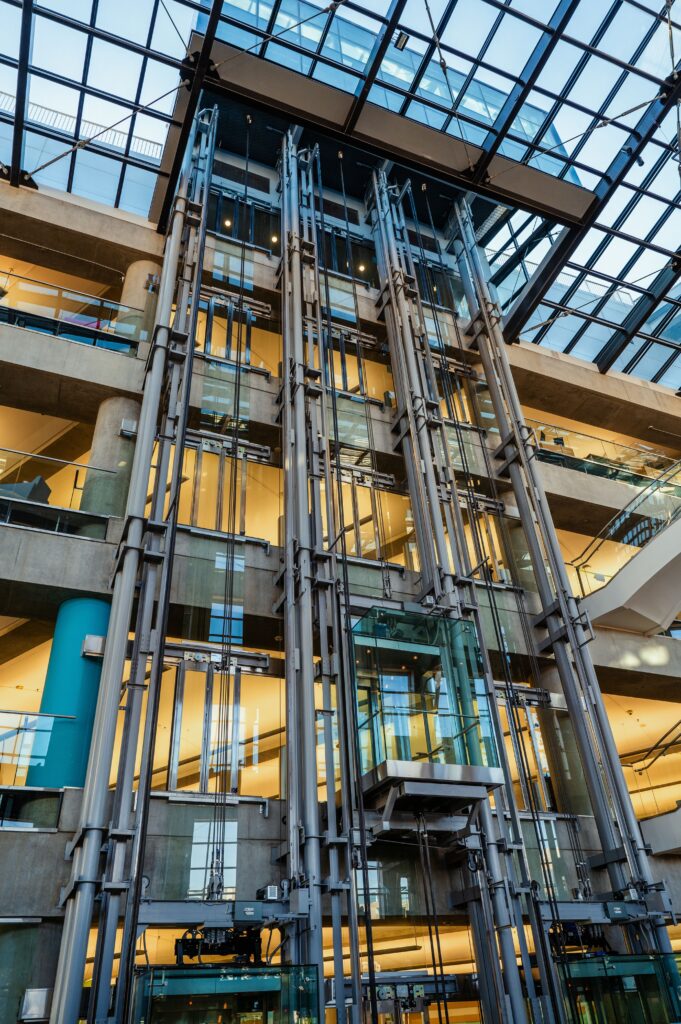
Modern traction elevators use a motor-driven traction sheave system with wire rope cables or belts and a counterweight.
Key Components:
• Electric machine (motor) and drive sheave
• Steel wire ropes or belts
• Counterweight system
• Advanced controller
How the System Work:
The motor rotates the drive sheave, which moves the ropes to lift or lower the elevator car and the counterweight offsets the load, which significantly improves efficiency of the elevator.
Applications:
• high-rise and Mid-rise buildings
• casinos and Hotels (common in Las Vegas)
• Office towers and hospitals
| Feature | Hydraulic Elevator | Traction Elevator |
| Best for | Low-rise buildings | Mid- to high-rise buildings |
| Speed | 100–200 ft/min | 200–2000+ ft/min |
| Energy Efficiency | Moderate | High |
| Installation Cost | Lower | Higher |
| Maintenance Cost | Moderate (increases with age) | Moderate to high |
| Ride Quality | Smooth but slower | Faster, More precise |
| Travel Distance | Limited | Extensive |
| Environmental Impact | Moderate (fluid use) | Lower (energy efficient) |
Installation Costs and Long-Term Value vs Short-Term Value
Hydraulic Lift Elevators
Key components of a hydraulic system :
• Simpler installation
• Lower equipment costs
• Reduced structural complexity
The factors mentioned above make hydraulic elevators a highly practical choice for cost-conscious projects in low-rise buildings.
Traction Elevators
Traction systems require:
• More complex engineering
• Counterweight installation
• Advanced drive and control systems
• Faster and energy safer
While the initial costs are higher, long-term energy and performance savings are often offset the upfront investment, especially in high-traffic buildings in Las Vegas.
Building Height Considerations
Hydraulic Systems
Best suited for:
• Buildings under six stories, in some cases, can be up to 7 floors
• Low to moderate traffic environments
Efficiency decreases as building height increases due to piston limitations.
Traction Systems
Ideal for:
• High-rise and mid- rise structures
• High-traffic facilities (casinos, office towers, hotels)
Their ability to handle long travel distances and continuous use makes them the preferred choice in most modern Las Vegas developments.
Speed and Performance
Elevators Operating on Hydraulic System:
• Usual speed range : from 100–200 ft/min
• Slower acceleration and longer travel times
Traction Elevators:
• Speed range: 200 to 2000+ ft/min
• Faster service and better handling of peak traffic
In high-demand environments, traction elevators deliver significantly better performance.
Consideration for Energy Efficiency
A Hydraulic Elevator System:
• Motor lifts full load on ascent
• Generates heat during operation
• Higher overall energy usage
Traction Systems:
• Counterweight reduces motor workload
• Compatible with regenerative drives
• Can reduce energy consumption by 30–50% specially with an updated motor’s drive
In energy-conscious Las Vegas facilities, traction elevators are generally the more sustainable option.
Requirements for maintenance
Maintenance for Hydraulic Elevator systems:
• Fluid level and quality monitoring
• Seal and valve maintenance
• Pump servicing
Common issues:
• Oil leaks
• Piston wear
• Fluid contamination
Traction Elevator Maintenance:
• Rope and sheave inspection
• Motor and brake servicing
• Controller diagnostics
Common issues:
• Wire ropes wear
• Drive system faults
• Electronic component failures
Modern traction systems benefit from predictive maintenance technologies, enabling early issue detection.
Passenger Experience and Ride quality
Hydraulic Elevators system
• Smooth operation
• Slower acceleration
• Acceptable for shorter travel distances
Traction Elevators:
• Faster acceleration and deceleration
• Precise leveling
• Reduced wait times
For premium Class A office buildings and high-end hospitality properties in Las Vegas, traction systems deliver a noticeably superior passenger experience for occupant and guest.
Impact on Environment
Hydraulic System:
• Use of hydraulic oil
• Potential for leaks
• Higher energy consumption
Traction Systems:
• Lower overall energy usage
• Regenerative technology options
• Supports green building certifications (LEED)
Sustainability goals increasingly favor traction technology.
2026 Industry Trends for Elevator
The elevator industry continues to advance rapidly, particularly in smart building environments.
Key Trends:
• AI-based predictive maintenance
• IoT-enabled remote monitoring
• Touchless elevator controls
• Destination dispatch systems
• Energy regenerative drives
Most of these innovations are more widely integrated into traction elevator platforms across the industry.
A Hydraulic Elevator : When to Choose
A Hydraulic system is ideal when:
• The building is under 5–6 stories
• Initial budget is limited
• Passenger traffic is moderate
• Simplicity and reliability are priorities
They remain a cost-effective solution for many smaller commercial properties.
When to Choose a Traction Elevator
Traction elevators are the better choice when:
• Building height exceeds six floors
• Passenger traffic is high
• Energy efficiency is a priority
• Premium ride quality is required
• Smart building integration is planned
In Las Vegas, traction systems are the preferred option for most new commercial developments.
Future Outlook
Traction elevators are expected to dominate new installations across the industry as commercial buildings become more technologically advanced and energy-conscious.
Particularly in low-rise construction where cost and simplicity are primary concerns, hydraulic systems will continue serving niche applications.
Advancements in:
• Motor efficiency
• Regenerative drives
• Digital monitoring
• Predictive maintenance
are reshaping performance expectations across both technologies.
Conclusion
Building heights, long-term operational goals , budget, and passenger traffic demand are the factors when deciding between hydraulic and traction elevators
• A hydraulic elevators is a practical and cost-effective for low-rise applications
• Usually Traction elevators offer superior performance, efficiency, and scalability for mid- to high-rise building applications.
By carefully evaluating current needs and future building requirements, property owners can, with AR Elevator USA’s advice, select an elevator system that delivers reliability, efficiency, and long-term value.
An Expert Elevator Solutions in Las Vegas, NV
The selection of the right system is only part of the equation. Installation, Proper design, and maintenance are essential for compliance and long-term performance of the elevator.
For hydraulic and traction elevator installation, maintenance, and modernization in Las Vegas, partnering with AR Elevator USA, a knowledgeable local provider, ensures your system operates safely, efficiently, and in full compliance with Nevada regulations.
AR Elevator USA; communicate, follow up and deliver
Elevator Machine Room Code Requirements in Las Vegas: A Guide for Building Owners
Elevator Machine Room Code Requirements in Las Vegas: A Guide for Building Owners Written by…
Understanding Nevada’s Fire Recall Testing Requirements: Why So Many Elevators Are Failing Inspection
Written by Eng. Houssam Zammam, QEI Elevator Inspector and Elevator Portfolio Manager Sometimes, an elevator…
Las Vegas Hydraulic Elevator Oil Change or Oil Filtration: What’s best for Your Elevator?
Written by Eng. Houssam ZammamElevator Portfolio Manager | Elevator Modernization & Vertical Transportation Consultant If…

Oil Overheating in Hydraulic Elevators in Las Vegas: Why It Happens and How to Fix It
Written by Eng. Houssam ZammamElevator Portfolio Manager The cab and doors are used by most…
Low Oil Problems in Hydraulic Elevators in Las Vegas: Causes, Warning Signs, Expensive Consequences, and Professional Repair Solutions
By Eng. Houssam ZammamQEI Elevator InspectorElevator Portfolio Manager | Elevator Modernization & Vertical Transportation ConsultantHydraulic…
How Extreme Las Vegas Heat Affects Hydraulic Elevator Oil and System Performance
By Eng. Houssam ZammamQEI Certified Elevator InspectorElevator Portfolio ManagerAR Elevator USA The relentless nature of…