
Elevators are used every day for the safe transportation of guests, employees, and equipment in commercial buildings, resorts and hotels. Although elevator rides appear smooth and effortless, they are made possible by strict safety standards, local regulations and accessibility requirements, that building owners are legally required to follow.
Commercial elevators in the United States are subject to a combination of national engineering codes, local jurisdiction requirements and federal accessibility laws. In Nevada properties, especially in high-traffic areas like Las Vegas, Henderson and Reno, compliance with more specific rules is required.
This guide breaks down the essential safety requirements every commercial property owner should understand.
National Engineering & Mechanical Codes (ASME A17.1)
Across North America, elevator safety standards are established by the ASME A17.1 / CSA B44 Safety Code for Escalators and Elevators. Standards for the construction, installation, and maintenance of elevators are established by this code.
Key requirements include:
- Door Lock Monitoring (DLM)
Door safety circuits must be continuously monitored by elevators. If the hoistway or cab doors are found to be unsecured, elevator movement is prevented. - Door Restrictors
These devices prevent passengers from opening the cab doors when the elevator is between floors, a critical protection against falls and entrapment injuries. - Firefighter’s Emergency Operation
When smoke or heat sensors activate, elevators must automatically return to a designated exit floor and switch to firefighter only control. - Hoistway Pit Safety
Elevator pits must include:
• Stop Switch
• Waterproof lighting
• Fixed ladders
• Dedicated sump pumps
These features protect mechanics and prevent water damage to equipment.
Federal Accessibility Standards ADA Requirements
Compliance with the Americans with Disabilities Act is required for any commercial building or hotel open to the public. Access to elevators for all passengers, including those with sensory or mobility impairments, is provided through these rules.
Key ADA requirements include: - Door Clearance & Timing
A clear width of at least 36 inches must be provided by elevator doors, and an open time of at least 3 seconds must be maintained before closing. - Cab Size & Turning Space
Adequate cab dimensions must be provided for the safe entry, turning, and exit of wheelchair users. Minimum interior dimensions typically range from 51 inches in depth to 68–80 inches in width, depending on the door configuration. - Accurate Leveling
Elevators must level flush with the landing floor with no more than a ½ inch vertical gap. - Accessible Control Panels
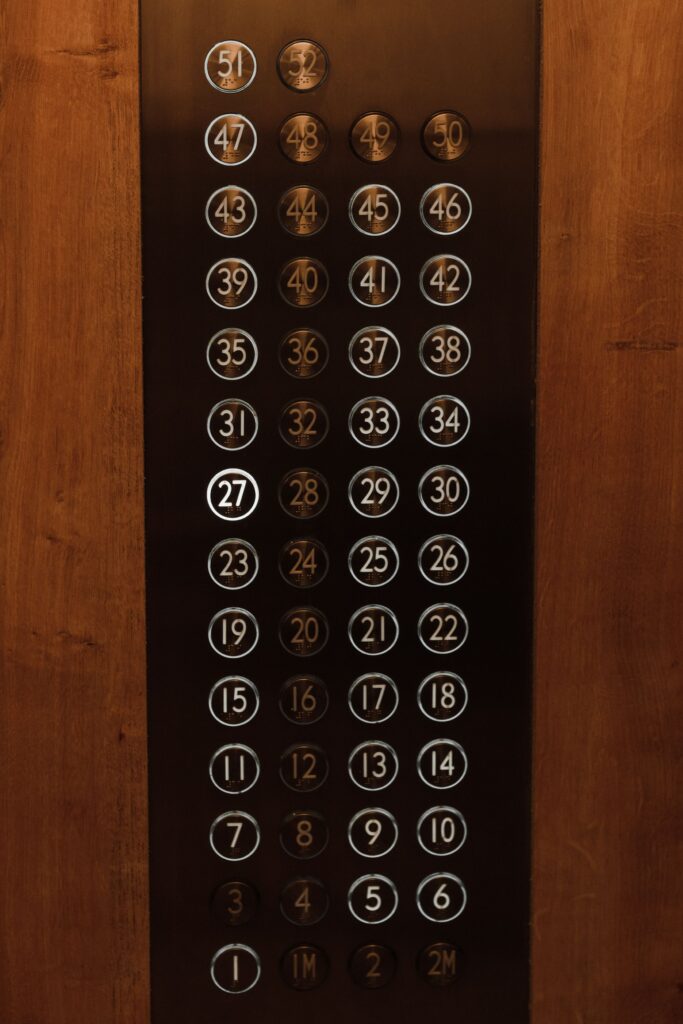
Buttons must be mounted between 15” and 48” from the floor and include braille labels. - Visual & Audible Signals
Elevators must provide:
• Audible chimes announcing floor arrivals
• Visual indicators showing travel direction
Requirements for Hotel Specific Elevator
Unpredictable traffic patterns, 24/7 operation and heavy luggage, are among the challenges faced by hotels. Because of these conditions, additional safety and operational standards are required. - Machine Room Climate Control
Temperatures below 95°F (40°C) must be maintained in elevator machine rooms to protect sensitive electronic controllers. - Two Way Emergency Communication
Modern elevators must include hands free communication systems that work for passengers with speech or hearing impairments. - Emergency Signage
Standardized signs instructing guests to use the stairs during a fire must be displayed in every elevator lobby.
Requirements for Maintenance, Inspection & Permit
Strict inspection and documentation requirements must be met for the legal operation of a commercial elevator. - Safety through annual Inspection
Most jurisdictions require a third party inspection every 12 months to maintain an active operating permit. - Posted Capacity Limits
The maximum load capacity must be clearly displayed inside the cab and at the main landing. - No Storage in Elevator Spaces
Machine rooms, control rooms, and pits cannot be used for storage — a common fire and safety violation.
• Fire recall test report signed with both the Fire system service company and Elevator Mechanic.
Nevada Specific Elevator Regulations
In Nevada, elevator safety is regulated by the Nevada Division of Industrial Relations under NRS 455C. The state enforces some of the strictest elevator safety rules in the country.
Requirements for Door Lock Monitoring (DLM)
ASME A17.3-2020 compliance, including modern door lock monitoring, is required for all existing elevators in Nevada. - Mandatory DLM Retrofits
Any elevator without a functioning, software verified DLM system is considered non compliant. - Modernization Requirements
If an older controller cannot support DLM upgrades, the property must modernize the entire system. - Door Restrictor Enforcement
DIR inspectors verify that passengers cannot force doors open between floors — a critical safety check for hotels.
Nevada Inspection, Permit & Maintenance Laws - Annual State Inspection
All commercial elevators must pass a full safety inspection every year to maintain their operating permit. - Pre Inspection Checklist
Before the state inspector arrives for a new installation or a modernization job, contractors must complete the official Nevada Pre Elevator Inspection Checklist, confirming items such as:
• Pre Inspection list for the Whole Elevator
• Self closing machine room doors
• GFCI outlets
• Properly fused disconnect switches - Maintenance Control Program (MCP)
Properties must keep detailed, on site maintenance logs available for review during unannounced inspections.
Nevada Hotel & Casino’s Specific Requirements
Nevada’s hospitality industry faces additional safety rules due to high occupancy, seismic activity, and gaming regulations. - Seismic Reinforcement
Elevators must meet Zone 2 seismic standards, especially in northern Nevada. - Casino Access Controls
Elevators connecting guest rooms to casino floors must integrate with surveillance and key card security systems. - Mandatory Accident Reporting
Any elevator related injury requiring medical attention must be reported immediately to the DIR. The elevator cannot return to service until the state completes its investigation. - Fire Service Testing Documentation
Commercial properties must regularly test firefighter recall systems and document results using Nevada’s official reporting form signed by both fire system service .
Construction & Renovation Rules
When elevators are being modified or used during construction, Nevada imposes strict operator requirements. - Licensed Personnel Only
Only licensed mechanics, apprentices, or helpers under direct supervision may operate an elevator undergoing construction or alteration. - Temporary Helper Work Cards
Temporary workers must hold a Nevada issued Elevator Helper Work Card, which expires immediately after the final inspection.
Protect Your Property with a Trusted Elevator Partner
Commercial elevator safety isn’t optional — it’s a legal requirement and a critical part of protecting your guests, employees, and building assets.
At AR Elevator USA, we help Nevada property owners stay fully compliant with:
• ASME A17.1 and A17.3 safety codes
• ADA accessibility standards
• Nevada DIR inspection and permit requirements
• Hotel and casino specific operational rules
Safe, reliable, and fully compliant elevator operation is provided by our certified technicians for high-rise hotels, commercial office towers, and mixed-use properties.
Contact Us
📞 702 810 2757
📧 info@arelevatorusa.com
🌐www.arelevatorusa.com
Elevator Machine Room Code Requirements in Las Vegas: A Guide for Building Owners
Elevator Machine Room Code Requirements in Las Vegas: A Guide for Building Owners Written by...
Understanding Nevada’s Fire Recall Testing Requirements: Why So Many Elevators Are Failing Inspection
Written by Eng. Houssam Zammam, QEI Elevator Inspector and Elevator Portfolio Manager Sometimes, an elevator...

Las Vegas Hydraulic Elevator Oil Change or Oil Filtration: What’s best for Your Elevator?
Written by Eng. Houssam ZammamElevator Portfolio Manager | Elevator Modernization & Vertical Transportation Consultant If...
Oil Overheating in Hydraulic Elevators in Las Vegas: Why It Happens and How to Fix It
Written by Eng. Houssam ZammamElevator Portfolio Manager The cab and doors are used by most...
Low Oil Problems in Hydraulic Elevators in Las Vegas: Causes, Warning Signs, Expensive Consequences, and Professional Repair Solutions
By Eng. Houssam ZammamQEI Elevator InspectorElevator Portfolio Manager | Elevator Modernization & Vertical Transportation ConsultantHydraulic...

How Extreme Las Vegas Heat Affects Hydraulic Elevator Oil and System Performance
By Eng. Houssam ZammamQEI Certified Elevator InspectorElevator Portfolio ManagerAR Elevator USA The relentless nature of...